
April 15, 2006
[permanent link]
Temples are a social, recreational, and spiritual place to visit in Japan. They carry history, culture, religion, and sights that draw tourists, frequent visitors, and religious people. If you can't find one, you're probably not looking. They are indeed everywhere. You can actually walk from Tokyo Tower to the Imperial Palace and further to the Yasakuni Temple via temples. The closest temple to my residence was Senso-ji, only 4 short blocks, which made it a common place to visit. Even though it wasn't my favorite place, it was up there just because it is such a sweet place.

The first time I went to the Senso-ji was on a Saturday during one of their festivals. I forgot my camera, so I didn't get a picture of the young kids dressed in swan hats. There's a lot of interesting stuff there besides the two temples, and souvenir shops. For one, the pond is excellent. It's so long that it has a few bridges over it.


There are a lot of people there and you're likely to find Japanese beauties posing for photos wearing yukata. Most temples that I saw were both Buddhist and Shinto. Wikipedia clears this up, saying that the 6 story temple is a Shinto shrine, Asakusa Jinja and the other is a Buddhist shrine, Senso-ji. Senso-ji has quite a few interesting pieces of culture. 1) Buddhists gathering to pray for virtues, 2) tourists taking in the sights, and 3) people going there to hang out. To compare these three culture items with America is slightly embarassing. Shrines are very nifty and there are plenty of religious people in Japan. The structure of the temples are much more open than churches are. There are plenty of interesting things for tourists to see in the various temples of Japan. Compared to shopping malls, temples are excellent place to hang out. If you'd like to argue the qualities of American spots, feel free to e-mail me.


There are a few things that a Japanese person will tell you about visiting a temple. Most importantly, if you want to pray, go right ahead. The idea is walk up the stairs, throw a coin into the box (optional), bow toward the shrine, pray, and then clap your hands lightly to finish. I'm not sure what the deal is, but it seems like a pretty simple way to pray. The next thing to think about is the incense or water. A temple might have incense burning. Just grab a few pieces of smoke to clean yourself from evil. Some temples have water. You take the dipper, wash one hand, switch hands, then pour a handful of water to rinse your mouth. This system is to ensure that people that go to the temple are fairly clean (from dirt and evil). The last thing is the mikuji, which is a Shinto tradition which is fortune paper sold for upkeep of a shrine. You'll probably need someone to translate it. For example, the one I got at the shrine at tallest spot in Tokyo said that I had medium luck in life, decent business, and if I was interested in love, to keep my thoughts on personality instead of beauty. Good advice and the fortune was pretty spot on.
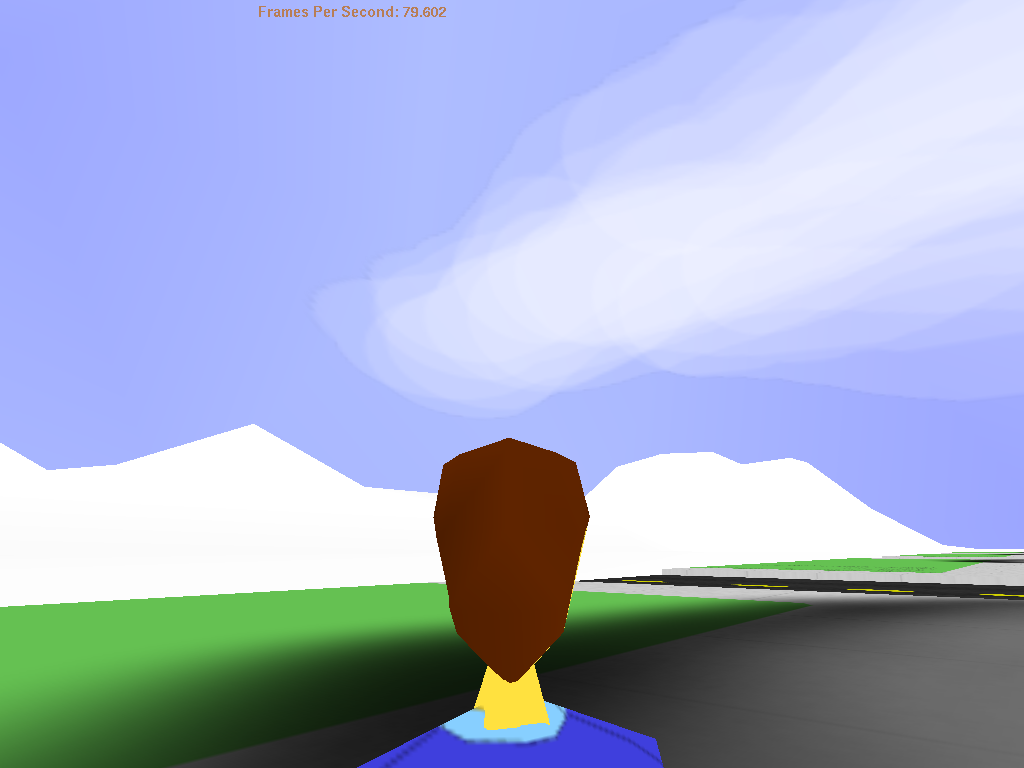
The other day I was talking about a dynamic sky system. It would act like the sky by changing its properties as the day goes by. I tried importing the simple sky system I had the other day into AS3D. It's still buggy, but you can see below that it did actually happen. I'm no longer using the crutch of setting the background color.
Automation is an interesting thing. Some things are just easier and faster done manually. Other things are easier and faster done by a computer. The science of discovering which really is better is left up to common sense. Sadly, common sense is commonly uncommon*. That's where today's design system comes from. I decided during a research session on Seattle buildings' architecture that automation of building design in Cell would be wasteful and that I could simply design buildings using very simple architecture techniques that I found during my research.
* If you get my cliche, laugh, it's not meant to be insightful.
A modest attempt at development on AltSci Cell can be viewed below. Months now with very little progress is disappointing, but I suppose I'll continue on. A rant about how easy laziness is would probably not advance progress any better than the past rants, so I'll spare you.
Today, I came up with a few ideas on the way to and from Uwajimaya Asian market. The first is that the sky has a quantifiable set of properties even though it is very complex and interesting in reality. But complete quantification of every meteorological property of the sky is not my plan. I want a fairly reasonable dynamic sky so that the player is not faced with 24 hours of daylight and something to break up the blue sky and black night. Adding a sunrise and sunset is not the only thing that a developer can do. Adding a gradient to the sky also helps. Artists will tell you that the sky has a white part near the horizon. Some days the sky is very deep blue, some days it is very light blue. How can we decide? First lighten and darken the sky randomly by day. Secondly, use the time of day to decide the deepness of the color. The next thing is clouds. It's obvious that the sky will have clouds in it some days. How do you properly add clouds? One way is by adding the clouds to the texture. Another way is by having a transparent layer with different types of clouds. This way if you really want to have fun, you can make moving clouds. Of course you can make textured clouds move, but it might require extra work. The final thing is stars. Of course, it's easy to add stars to a sky, right? Well, you are going to have a bit of trouble depending on your choice of UV coordinates or if your sky is a box. It's possible to do it correctly, it's just a matter of work.


