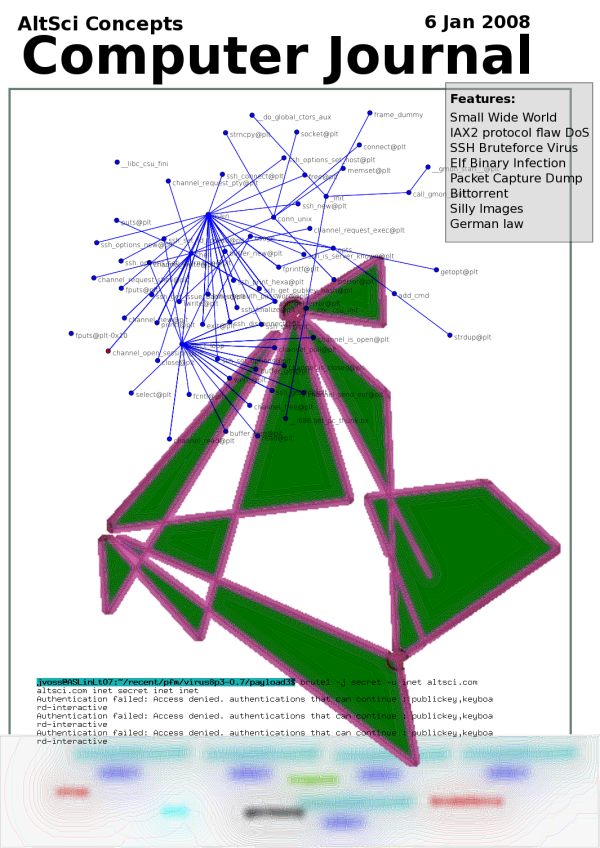
by Javantea Sept 3, 2008
I went on Amazon and found a watch. It's a timex ironman, like I said, but one of the features I liked about it has changed on all the new models, the old ones had start/stop lap/reset side by side on the front. Now they have start/lap on the front and 4 buttons around the sides. Must've decided it was cheaper and/or more likeable. I looked through 50 versions, even the "traditional" version has a single button on the front. I wonder why they didn't call me before making the decision. I really feel old now. =) As they say, "times (timex) change".
Old isn't in the years since you've been born, a lot of people age really slowly, and some people (especially meth/heroin addicts) age really quickly. I still don't consider myself old. I'm wiser than I was when I was 16 and my problems, responsibilities and possibilities are totally different, but even my situation doesn't declare me old. If I keep clinging to my youth and the youth of people I know, I'm certain to be a 35-year-old kid some day (actually that's not too far away). I think the real definition of age is how many things you've yet to do. It's a rather backwards way of looking at it and rather morbid at that, but if you consider the years ahead rather than the years behind, you can plan for what you'll be doing "then", where "then" is any time you wish to consider. If a person plans to live for 10,000 years, they will have thousands of years ahead of them, making them eternally young in comparison to how old they are bound to be. A lot closer to the present, this year I'm headed for a major breakthrough. At midnight after my birthday, I made a lot of progress. I don't know when my breakthrough is going to occur, but I sure know what I'm going to be doing until then.
Read more »
by Javantea
May 24, 2008
It seems like automatically generated steganographic-quality images are going to be a regular feature since everyone likes them so well. Today I'll just focus on the algorithm and why it works.

I started with a very non-random image used as an initial seed.

I added another very non-random image for another seed.

I added a fairly random cross hatch image as another initial seed, still not nearly good enough for steganography.

I added a very random hurl (seed 4262833791, 60% random, repeat 11) for an even random seed, almost good enough for steganography, but not good enough for plausible deniability.

Together, this is what they look like:

I then did a gaussian blur radius 50 twice and a sharpen 99:

This is the style that most people recognize as being my style.
I can then change the levels to fit my color and sharpness requirements and did a final blur to ensure the histogram is flatter:

At this point, the image is finished. Why does it work? First of all, a requirement of a steganography-quality image is random seed as seen in picture 4. A random seed alone is not good enough for plausible deniability because no one sends a picture with simple noise (unless they're talking about noise like I am now). The other seeds I added give the picture a very pronounced human texture. This helps with plausible deniability, randomness, and coverage. Adjusting the colors makes the image very pronounced so that a person can claim plausible deniability. This is a valid steganography algorithm because it adds human input, random data, blur, another non-trivial algorithm (sharpen), and a flat histogram with only a few spikes. The important parts of steganography are: anti-brute force, anti-reverse, flat histogram, plausible deniability, and easy generation. This image fits all requirements easily.
Read more »
jvoss@altsci.com
jvoss@myuw.net
April 18, 2008
AltSci IAX2 0.7
[sig]
AltSci IAX2 0.6
[sig]
UPDATE May 24, 2008
I have done a mildly thorough investigation of 1.4.19.1 (the fixed version) and I understand their solution (verify a pseudo-random call number). The solution is as good as I recommended. It does not solve the non-spoofed DoS attack since the attacker can use the call number it receives from the accept packet, but it does make the spoofed DoS attack much less useful (1:5 amplification is practically worthless). I consider this grevious security bug to be fixed. I have not tested backwards compatibility of devices and software versions. I plan to test whether this can be recreated via uncommon use cases such as psuedorandom guessing, sending random commands, etc. I hope that Asterisk will accept my apologies for releasing the exploit before they had a chance to respond. I plan to disclose all future vulnerabilities full disclosure after a timely opportunity for the vendor to respond. I encourage all other security researchers who use my tools to release the vulnerabilities that they find in a similar manner for the benefit of the community.
UPDATE April 24, 2008
Asterisk has responded to the release of my second exploit and framework with a set of patches to SVN. They have made the bug report above publicly available which pleases me. I haven't tested this to make sure that it isn't vulnerable, but I can assure you that I will. I will also spend time to see if their patch is backwards compatible with other versions of Asterisk and soft phones. I applaud Asterisk for their work toward fixing this obvious flaw. Together I believe that we can write and test a good VoIP protocol.